
Amid the chaos of midterms and Halloween, you may have missed UNCW’s sustainable contributions during this year’s Campus Sustainability Month (CSM).
CSM occurs every October; UNCW takes this opportunity to promote their green efforts on our campus. Started by The Association for the Advancement of Sustainability in Higher Education (AASHE), this month is an international celebration of sustainability at colleges and universities. Many campuses, including UNCW organize events that inform the community of their behind-the-scenes efforts to create a more sustainable campus. AASHE states, “The goal of CSM is to raise the visibility of campus sustainability and provide campus sustainability advocates with a platform through which to deepen campus engagement around sustainability.”
Sustainability is important for long term maintenance of ecological and human resources. Our work today preserves the environment so future generations can enjoy the same materials we have. Sustainable practices address many variables such as climate change, cost of living, student well-being and resource depletion. There are three pillars to sustainability: environment, economy and social trends. UNCW works to ensure efficient use of natural resources to give present and future students a better quality of life.
This October, UNCW’s Office of Sustainability hosted many events including Rain Garden Maintenance, Paws for Planet, Sustainability Career Panel, Sewing Repair Workshop and a Spooky Swap Shop Pop Up. Each of these events are recurring and can be found throughout the year on WaveLink.
UNCW Sustainability Efforts
Every day UNCW takes necessary action to create a greener campus. From monthly events to engage students and faculty to infrastructure and recycling efforts that improve campus. The Office of Sustainability is a department on campus that advocates for, and develops sustainable solutions. UNCW is currently a part of two sustainable projects: the 319 Grant program started in 2019 when UNCW partnered with the City of Wilmington’s Heal our Waterways and NC Coastal Federation on stormwater control efforts. The Shoreline Sports Complex, located across from Shore dining hall for student recreation, was installed with a 17kW (kilowatts) solar array, a collection of solar panels designed to capture sunlight and convert it into electricity. By generating its own power from the sun, the building will require less electricity from the traditional grid, which typically includes generating natural gases or coal. More information on the two projects can be found on the campus sustainability website.
Stormwater Management
Connecting to the 319 Grant Program, stormwater management includes directing the flow of water runoff after a storm. Management aims to collect rainwater to reduce the risk of floods. Stormwater management also includes practices that capture pollutants and absorb them into soil or debris before they can enter a larger body of water such as the ocean. On campus, Leutze Lakes are stormwater ponds. These ponds collect rainwater and allow sediment to settle at the bottom of the pond before they can reach storm drains connecting to our coastal waterways. 85% of campus is irrigated through recycled stormwater from the ponds. Approximately 400,000 gallons of stormwater on campus are collected every time it rains. If you ever see the sprinklers on while it is raining, they are on to prevent flooding of the ponds through the use of recycled rainwater; therefore, excess water is not wasted.
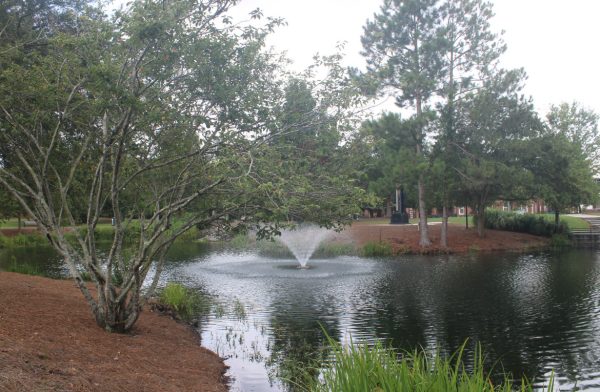
Another way UNCW is managing stormwater is through rain gardens. Rain gardens lie slightly below the ground to absorb rainwater running off the surface. UNCW has 6 rain gardens. Every month the Office of Sustainability hosts Rain Garden Maintenances; this includes weeding and mulching the gardens. This event is a great way to gain service hours and get involved with sustainability on campus. More information can be found through WaveLink.
Seahawk Trail System
Wilmington is filled with a diverse ecosystem that can be explored right on campus. In 2024, the Seahawk Trail System was initiated to encourage students to step outside and connect with nature. There are four trails in this system: Tar Kiln Trail, Sustainability Trail, Bluethenthal Wildlife Preserve and The Longleaf Trail. These trails are maintained by the Office of Sustainability with trail markers and emergency systems along the path. Taking time to connect with nature is beneficial for students’ well-being and physical health. It has been proven that spending time outside provides emotion resilience and helps manage anxiety, linking students back to themselves. When communities connect to their environment, they are more likely to care for the environment. More information on parking and mapping can be found on the Seahawk Trail System website.
Recycling
UNCW is very committed to recycling. There are over 400 recycling points across campus, with spaces such as Fisher Student Union maintained daily. There, students can recycle unique items including office supplies, batteries, candy/chip wrappers, razors and more. UNCW also has a Recycling Depot on Lionfish Drive behind the University Suites. It is open from 7 a.m. – 6 p.m. each day so students and faculty can come by to drop off their items. Our campus allows students and faculty to recycle items such as Styrofoam, electronics and plastic film. Many other depots, including places in the community, are not as diverse in what can be recycled.
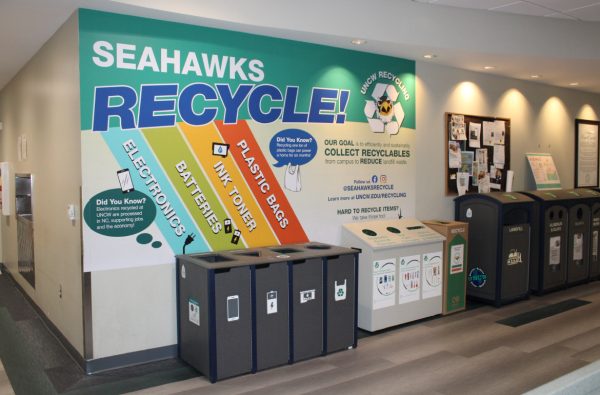
On UNCW’s recycling website, you can find many services such as bin requests for office cleanouts or events. The Recycling Depot also has opportunities for students to get involved as volunteers or interns. Students have the chance to learn the ins and outs of the recycling industry from sorting items to assessing environmental sites. Faculty and staff can request tours or presentations of the facility for their students to learn more about the warehouse and how to recycle properly.
On the website you can find a list of what specific items can be recycled on campus and in the Wilmington community.
Campus Dining
UNCW dining is certified by the Green Restaurant Association for waste, energy efficiency and reusable materials. Our dining halls aim to mitigate food waste through composting and portion programs. The main dining halls divert thousands of pounds of food monthly due to this system. They each run on an “all you care to eat” system; students can ask for a specific portion size to prevent excess food waste. All the food placed on the conveyor belts in the dish pit are then composted instead of thrown away.
The dining halls source from local farms and producers to reduce food miles while supporting local agriculture. Vegan and vegetarian options are also available on campus, with 34% of main dishes at Shore Dining Hall being vegetarian.
More information on specific programs and ways to get involved with UNCW dining can be found on the sustainability dining website.
Programs and Events
The Office of Sustainability has worked to create many programs that make sustainability accessible to students and faculty.
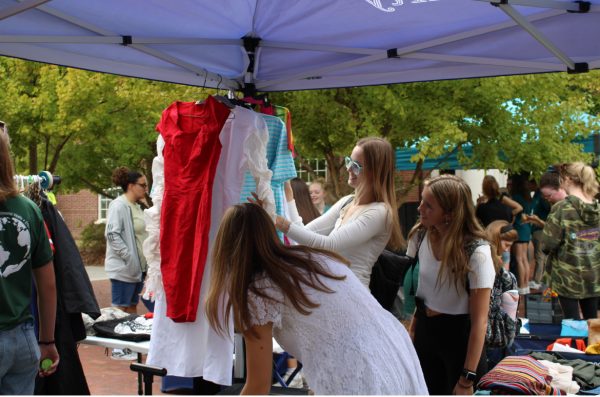
- Swap Shop – The Swap Shop is an on-campus thrift store where students, faculty or staff can donate or take items for free. It can be found in Warwick behind Dubs and is open from 11 a.m. – 4 p.m. Monday through Friday. Monthly, the Office hosts pop-ups where you can sift through items brought out to the quad
- Closet Clean Out – At the end of each year, storage bins are placed outside of residence hall on campus. Students can place their unwanted items in the storage bins where staff will sort through them and donate these items to the community. In the past, donations have been made to Campus Catholic Ministry, Habitat for Humanity, Good Shepherd Center, Manos Unidas, Vintage Values, Hawk’s Harvest, UNCW Library and Our Infant of Prague. This program is used to help mitigate waste from items that are in good condition and would otherwise be thrown away.
- Reusable to Go – This program is a way to reduce food waste on campus dining halls. Wagoner and Shore dining halls provide students with metal containers for their leftover food at the end of a meal. Students with a meal plan can check out containers after downloading the USEFULL app. Students have two days to bring them back, free of charge. By shifting away from disposable packaging, Reusable to Go promotes the use of reusable containers to help students divert waste from landfills and prevent plastic pollution.
- Another reusable program is the reusable beverage containers. If students bring a reusable mug to Central Perch, Starbucks, Einsteins or Dunkin, they will receive 25 cents off their
- Dubs Grocery Run – This program teaches students how to use the local transit system to get to the grocery store. Occurring once a month, students learn how to be frugal shoppers, ending with a trip to the grocery store. The importance of this program is to aid food security. Students without vehicles have a difficult time gaining the resources they need for meals. Simultaneously, college students often struggle to get substantial meals on a budget. Dubs Grocery Run gives students a resource to get the meals they need.
Student Involvement
UNCW provides many ways for students to join the mission to create a greener campus. The Office of Sustainability hires Peer Educators every fall semester as a link to the community. Peer Educators host volunteer opportunities, conduct educational programs and collaborative events with other student groups. This position is a job for students of any major who are passionate about advancing sustainability on campus while informing other students and faculty of its importance.
Peer Educators create events through The Office of Sustainability to promote education through engagement, with many taking place in the month of November. If you’re interested in learning what the Office of Sustainability is up to, more information can be found on their Instagram.
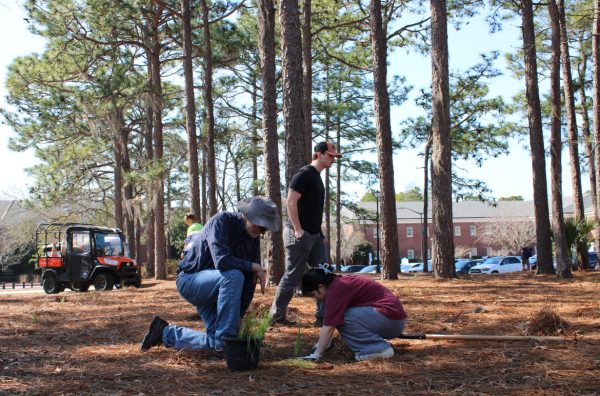
UNCW offers a sustainability pledge for students and faculty to show their commitment to creating a greener campus. Signing the pledge shows your support for environmental and social stewardship. Once you’ve signed the pledge, you will be given the option to subscribe to the sustainability newsletter. The newsletter is designed to share the sustainable events and resources campus offers each month.
There are endless ways for students to do their part on campus, whether it be volunteer opportunities with the Office of Sustainability and Recycling center or signing the pledge. Even shopping locally and thrifting or participating in recycling and composting on your own time makes a difference. Aim to bring reusable water bottles to campus, eat vegetarian meals once a week, and join a campus green event.
There are many other clubs and communities on campus supporting sustainability such as Surfrider, Plastic Ocean Project, Gardening Club, Epsilon ETA Environmental Honors Fraternity, Seahawk Wildlife Society and more. Students are encouraged to join clubs or initiatives on campus that align with their goals.
There is always work to be done. UNCW is continuously striving to grow in a more sustainable direction. There is not one perfect solution to sustainability, but each action taken by campus community members is a step forward. Campus sustainability is more than just the environment; it is made possible through culture and behavior.
By choosing to sustain UNCW, you become part of the stewardship for a brighter future for the next generation of Seahawks.